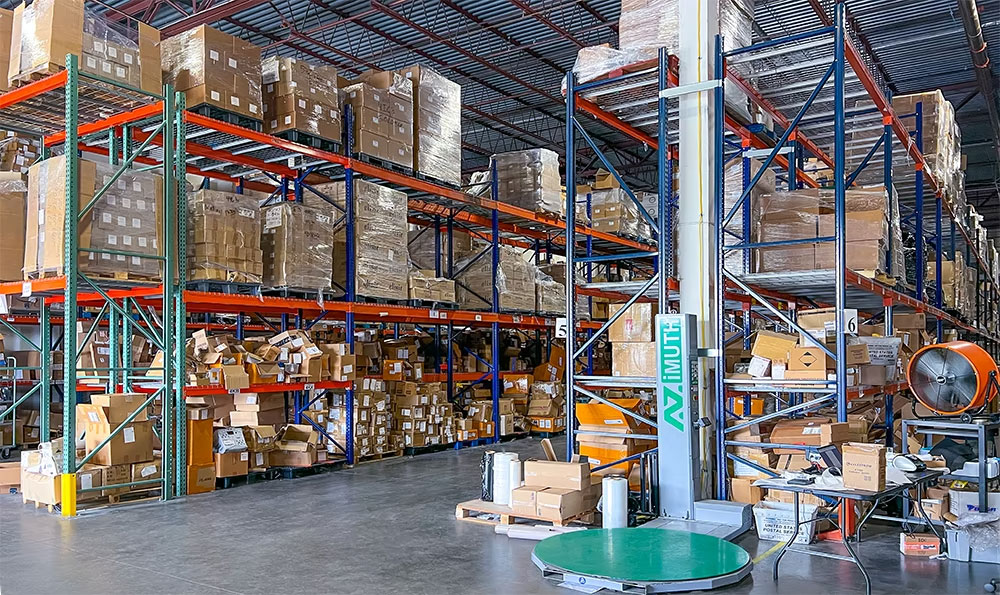
At some point, every growing direct-to-consumer brand hits the same wall. Orders are coming in faster than you can pack them. Your garage, spare room, or self-storage unit stops making sense. And the cost of getting it wrong — a late shipment, a missing insert, a broken item — starts showing up in your reviews and your refund rate.
That's when the search for a 3PL begins. And that's where most brands make their first expensive mistake: choosing a fulfillment partner based on price alone, without understanding what actually separates a DTC-ready operation from a generic warehouse that happens to ship boxes.
This guide covers the criteria that matter — so you can evaluate 3PL partners the way operators do, not the way salespeople pitch them.
Not All 3PLs Are Built for DTC
Most third-party logistics providers built their operations around B2B fulfillment — shipping pallets and cases to retailers on scheduled deliveries. Direct-to-consumer plays by completely different rules. DTC means high-volume, individual orders that need to ship fast with near-perfect accuracy. It means Shopify integrations, branded unboxing experiences, and customers who expect a tracking update the moment their package leaves the dock.
The wrong 3PL doesn't just slow you down — it creates churn, chargebacks, and brand damage that no ad budget can fix.
Before you start comparing quotes, get clear on one thing: you're not just looking for warehouse space. You're looking for an operational extension of your brand.
Warehouse Location and Shipping Zones
Where your 3PL is located has a direct impact on delivery speed and shipping cost — two things your customers notice immediately. The major US logistics hubs each serve a different coverage footprint.
| Location | Coverage Advantage | |
|---|---|---|
| 🚚 | Chicago, IL | Reaches ~80% of US population within 2 days by ground |
| 🌎 | Atlanta, GA | Covers Southeast and South-Central efficiently |
| 📍 | Dallas, TX | Strong central and southern US coverage |
| 🚢 | Los Angeles, CA | Best for West Coast and Pacific Rim imports |
| ✈️ | Fort Lauderdale, FL | Southeast US + international gateway, fast Florida delivery |
For most DTC brands doing under a few hundred orders a month, one well-placed warehouse outperforms a complicated multi-location setup. Splitting inventory across two nodes only makes sense once your daily order volume justifies the added complexity — otherwise you risk stockouts in one location while inventory sits idle in another.
SLA Commitments That Actually Mean Something
Every 3PL will tell you they ship fast. What separates real partners from marketing brochures is whether they'll put it in writing — with penalties attached.
Order cutoff time
When is the last moment an order placed today will ship today? Most DTC-optimized 3PLs commit to same-day fulfillment for orders received before a stated cutoff — typically noon to 3PM local time.
Pick accuracy guarantee
Industry best practice is 99.5% or higher. If a provider can't quote you a number, that's a red flag. Ask how errors are logged, corrected, and reported.
Receiving turnaround
How quickly does inbound inventory go from dock to available stock? Delays here cause phantom stockouts and kill your ad spend efficiency.
Penalty clauses
A good SLA includes financial remedies for missed performance — not just apologies. If there's no penalty for poor performance, the 3PL has no financial incentive to prioritize your account when things get busy.
Reporting cadence
Weekly SLA reporting tied to invoice reconciliation is the standard for a professional operation. If a provider can't show you a dashboard, they're operating on gut feel.
Platform Integration and Tech Stack
For DTC brands, fulfillment is a real-time operation. Your 3PL's warehouse management system needs to talk to your store — instantly. Delayed inventory syncs cause overselling. Manual order entry creates errors. And a WMS that can't push tracking numbers to Shopify automatically is going to generate support tickets you'll spend hours answering.
Look for native integrations with your stack: Shopify, TikTok Shop, WooCommerce, or whatever platform you run on. Ask whether the integration is a direct API connection or a third-party middleware layer — the latter introduces failure points. At OneDayBundle, we integrate directly with Shopify and TikTok Shop, pushing order status and tracking in real time without manual intervention.
Branded Packaging and DTC-Specific Services
A box is not just a box when you're a DTC brand. The unboxing moment is your most direct touchpoint with the customer — more personal than any email campaign, more lasting than any ad impression. The right 3PL treats packaging as part of the product experience.
When evaluating a fulfillment partner, ask specifically about custom branded boxes, tissue paper, thank-you cards, promotional inserts, and kitting for subscription or bundle orders. Many warehouse operators that call themselves "DTC-ready" don't actually support custom pack configurations — they use whatever box fits and call it done.
$186.6B
Projected US DTC ecommerce sales in 2025, making fulfillment quality a major competitive
99.5%
Minimum pick accuracy rate you should require from any DTC 3PL partner in writing
25–40%
Potential reduction in shipping costs by placing inventory closer to your customer base
Returns Handling With Visibility
Easy returns increase conversion rates and drive repeat purchases. Handled poorly, they drain your margins and generate the kind of negative reviews that follow a brand for months. Your 3PL should do more than accept returned packages — they should inspect items, restock what's sellable, and log return reasons so you can identify product or sizing issues before they become a pattern.
Ask whether the 3PL tracks return reason codes and provides that data in a usable format. A provider that just restocks without capturing why items came back is leaving your product team blind.
Pricing Transparency and Hidden Fees
3PL pricing is rarely as simple as it looks on a rate card. Storage fees, pick-and-pack fees, receiving fees, account minimums, kitting charges, dimensional weight surcharges, and carrier accessorials can turn a competitive quote into a costly surprise. The brands that get burned are the ones who compared per-order rates without asking what's included.
Before signing anything, ask for a full fee schedule — not a summary. Run a sample invoice against your actual average order profile: SKU count, package size, insert configuration, average distance to customer. That number is your real cost per order, not the headline rate.
Account Support That Shows Up
When something goes wrong — a batch ships late, a carrier loses a pallet, a customer escalates publicly — you need a human being who knows your business and picks up the phone. The 3PL industry is full of providers who offer attentive onboarding followed by a support ticket queue once you're live.
Ask how account management works after go-live. Is there a dedicated contact, or does every issue go into a shared inbox? What's the response time commitment? At OneDayBundle, every client gets a dedicated account manager who knows their catalog, their packaging requirements, and their SLA thresholds — not a call center queue.
Questions to Ask Before You Sign
Use these in your first call with any 3PL candidate. The answers — and the hesitation around them — will tell you more than any sales deck.
What is your guaranteed order cutoff and same-day ship rate?
Ask for last quarter's actual performance number, not the target.
What happens when you miss an SLA?
Walk me through the last time that happened and how it was resolved.
Show me the Shopify integration in action
A screen share takes five minutes and eliminates a category of risk.
How do you handle returns?
What data do you capture, and how is it reported?
Can I see a sample invoice from a brand with a similar order profile to mine?
Transparency here is a green flag.
Who is my point of contact after go-live, and what is their SLA for responding to issues?
Choosing a 3PL is one of the highest-leverage operational decisions a DTC brand makes. The right partner reduces your cost per order, improves the customer experience, and gives you the bandwidth to focus on growing the brand. The wrong one does the opposite — quietly, order by order, until it shows up in your churn rate.
Ready to find a 3PL that's actually built for DTC?
Talk to the OneDayBundle team about fulfillment, Shopify integration, branded packaging, and same-day shipping — from Fort Lauderdale to your customer's door.
Get a Free Fulfillment Consultation