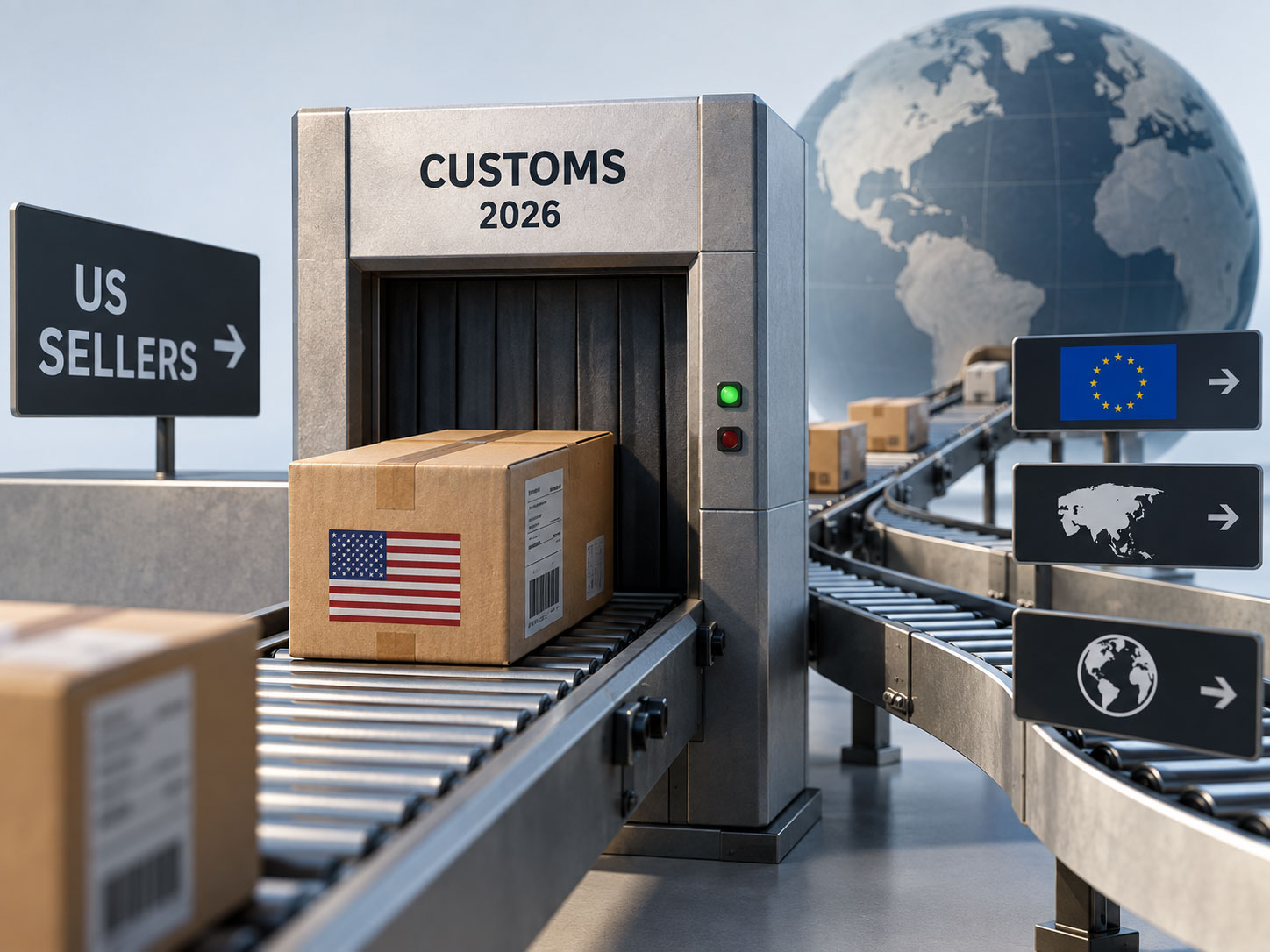
Eighteen months ago, a $40 order shipping to Berlin or Toronto cleared customs untouched. Today it doesn't. The US suspended its $800 de minimis exemption for every country, the EU killed its own €150 exemption, and sellers who never thought about HTS codes are now pricing duty into every international order or eating the support tickets when customers get billed at the door.
What Actually Changed in 2026
The US timeline moved fast: de minimis suspended for China and Hong Kong origin parcels on May 2, 2025, extended to all countries on August 29, 2025, then locked into permanent CBP regulation on June 24, 2026. The One Big Beautiful Bill Act, signed July 4, 2026, makes the elimination permanent going forward. On the EU side, the €150 duty-free threshold ended July 1, 2026, replaced by a flat €3 customs duty per item type, with an additional €2 per-line-item handling fee expected by November 1, 2026 — a transitional rule covering roughly 93% of ecommerce parcels entering the EU until the bloc's full Customs Data Hub goes live in 2028.
$800
Former US duty-free threshold, gone
€3 + €2
New EU duty plus handling fee
58%
Rise in cart abandonment on shipping fees
$2.67T
Cross-border ecommerce by end of 2026
None of this makes international selling unprofitable. It does mean the fulfillment decision that used to be an afterthought — how a package actually crosses the border — now shows up directly in your conversion rate and your margin.
DDP vs DDU: Who Eats the Duty Bill
Delivered Duty Paid (DDP) means you collect duty at checkout and the customer never sees another charge. Delivered Duty Unpaid (DDU) means checkout looks cheaper, but the customer gets billed for duty, taxes, and a carrier handling fee when the package arrives — or the parcel gets refused and shipped back at your cost. Before the de minimis changes, DDU was tolerable because most orders slipped under the exemption anyway. Now every parcel triggers formal entry, so DDU friction hits every single international order instead of the occasional high-value one.
| Model | What It Means in Practice | |
|---|---|---|
| 💳 | DDP | Duty shown at checkout, higher sticker price, fewer refused parcels — ships from one US hub |
| 📬 | DDU | Duty billed on delivery, lower sticker with a surprise fee, more refused and returned parcels — ships from one US hub |
| 🏬 | In-country stock | No customs at delivery, landed cost set upfront, fastest near-domestic delivery — needs a local warehouse |
Holding inventory inside the destination market sidesteps the duty conversation at delivery entirely, but it trades customs friction for warehousing cost and inventory splitting. Domestic parcels typically run $4–$8 in postage with 1–3 day delivery; cross-border parcels run $12–$25 with 7–21 day transit, even before duty. For sellers whose international volume is still thin, that gap usually makes DDP through a single US-based fulfillment partner the more realistic starting point than standing up a second warehouse overseas.
A customer who gets a surprise customs bill at the door doesn't blame the carrier — they blame the brand, and they rarely place a second order.
The math backs that up: extra costs revealed late in checkout are already the single biggest driver of cart abandonment, and international shoppers abandon at even higher rates when shipping costs aren't clear upfront. A DDP setup that shows the full landed cost before payment converts better than a lower sticker price that turns into a bill three weeks later.
Do you support DDP at checkout?
Confirm whether your fulfillment or shipping partner can calculate and collect duty and tax at the point of sale, not just print a label.
How do you handle HTS classification?
Ask who assigns the 10-digit tariff code per SKU and who's liable if it's wrong — misclassification delays clearance and can trigger penalties.
What happens to a refused or returned international parcel?
Get a clear answer on who pays return freight and how refused shipments are restocked or written off.
Which countries can you actually hold inventory in?
If international volume justifies local stock, confirm real in-market warehouse coverage, not just a carrier partnership.
Can you show landed cost by SKU and destination?
A partner who can't break out product, freight, duty, and fees by lane can't tell you which markets are actually profitable.
What's your average customs clearance time by lane?
Clearance delays vary widely by country — ask for real transit data, not a marketing estimate.
None of this requires solving every market at once. Most sellers are better off picking two or three destination countries where demand already exists, getting DDP working cleanly on those lanes, and only building out in-country inventory once volume justifies the fixed cost of a local warehouse.
Ready to Fix International Fulfillment Before the Next Customs Deadline Hits?
OneDayBundle handles landed cost, HTS classification, and DDP checkout so your international orders clear customs without surprises.
Talk to a Fulfillment Specialist